 K3N8H
The Solo Operator's First 90 Days
Three 30-day blocks, each with real decisions and a cash checkpoint.
K3N8H Verified
- ✓ Real preview shipped
- ✓ License terms specified
- ✓ Stated limitations verified
An operational playbook for a new 1099 service operator, following the same Oak St HVAC example used across this niche's desks — what to decide by day 30, 60, and 90, with a cash checkpoint at each stage.
Runs where you work
Built for a private workflow: local-first execution, no forced cloud dependency, and a clear path to use it on a laptop or phone without an API key.
Included value
Each product is designed to feel personal, useful, and complete without turning your work into an external dependency.
Free tools that go with this
These run in your browser, need no account, and keep what they remember on your own device.
Preview
Open full preview →The Solo Operator's First 90 Days
The Solo Operator's First 90 Days
An operational playbook for a new 1099 service operator (HVAC, electrical, plumbing, and similar trades)
Disclaimer: This document is for informational purposes only and does not constitute financial, legal, or tax advice. It does not replace your state/local licensing requirements, insurance obligations, or a real accountant. Figures in the filled example are illustrative and must be verified against your own numbers.
How to use this playbook
Each 30-day block has a short list of decisions and a cash checkpoint. The filled example below follows "Oak St HVAC" — the same solo operator used across this niche's other desks (Weekly Cash Desk, Deposit Desk) — so you can see how the playbook, the deposit stamp, and the 13-week forecast connect in practice.
Days 1–30: Set the Floor
Decisions to make:
- Set your cash floor — the number your account never goes below without it being a real emergency. Under-capitalized operators fail on a timing problem, not a total revenue problem: the money was coming, just not before a bill was due.
- Set your tax vault percentage (a flat % of every dollar in, moved to a separate account, untouched). 25–30% is a common starting point for a solo 1099 operator in the US, but confirm with an actual accountant for your situation.
- Decide your deposit policy in writing — what % up front, before any materials are ordered — and use it on every job without exception.
- Get liability insurance and any required trade license active before your first paid job, not "in progress."
Cash checkpoint: open a business account, deposit your starting capital, and use the Weekly Cash Desk to run a rough 13-week forecast even with estimated numbers — it's better to see a rough floor-hit warning now than a real one in week 6.
Oak St HVAC, filled example: started with $4,200 opening cash, set a $1,500 floor, a 30% tax vault, and a 40% up-front deposit policy on every job over $1,000.
Days 31–60: Prove the Loop
Decisions to make:
- Track every job's actual profitability (quoted vs. actual materials/labor) — not just whether it got paid, but whether it was worth taking.
- Print a deposit page (or use the Deposit Desk) before starting every job over your own set threshold — no verbal-only agreements once you're past the first few "get to know you" jobs.
- Review your first month's cash forecast against what actually happened. Where was the forecast wrong, and why? Late-paying clients? Underestimated materials?
- Decide your change-order policy in writing: anything outside the original scope gets a signed addition before the work happens, not after.
Cash checkpoint: re-run the 13-week forecast with real numbers from your first 30 days instead of estimates. If the floor gets hit earlier than you expected, that's real signal to fix now, not a reason to panic later.
Oak St HVAC, filled example: by day 45, the real forecast showed the $1,500 floor hit in week 5 once a $890 materials cost landed the same week as a client's remaining balance was still outstanding — the Weekly Cash Desk stamped this HOLD SPEND, meaning: delay the next materials order until that $3,120 remaining balance actually clears.
Days 61–90: Decide What to Scale
Decisions to make:
- Look at which job types were actually profitable after real materials and labor time (not just quoted profit) — double down on those, quietly raise prices or stop taking the ones that weren't.
- Decide if you need a subcontractor or helper yet. The honest test: are you turning down profitable work because you're out of hours, or are you still filling your own calendar?
- Set a recurring weekly 15-minute "cash and pipeline" check — same day, same time, non-negotiable — using your actual bank balance, the 13-week forecast, and your open-jobs list.
- Write down your minimum acceptable deposit and payment terms as a one-page policy you can hand a new client, so it's consistent instead of renegotiated every time.
Cash checkpoint: at day 90, compare your actual ending cash to what the Day 1 forecast predicted. The gap between those two numbers, more than either number alone, tells you how well you actually understand your own cash flow.
Oak St HVAC, filled example: by day 90, HVAC changeouts (like the 3-ton condenser job used in the Deposit Desk's own example) were consistently the most profitable job type; smaller repair calls were breaking even after drive time. Oak St HVAC's owner used this to start quoting repair calls higher and changeouts more aggressively.
What this playbook does not do
- It doesn't replace an accountant, a lawyer, or your state's licensing board.
- It doesn't guarantee any of these numbers apply to your market, your trade, or your cost structure — it's a decision structure, not a forecast.
- It assumes you're already licensed and insured for your trade; it doesn't cover how to get licensed.
Preview truncated — full file included after purchase.
What's included
- playbook.md (editable)
- README.md
Built with
Written guide in Markdown
License & pricing
Try it before you buy. The preview above is the real product, not a mockup.
Personal License
$13
For your own work or your own business. No client work, and no resale or redistribution of the files.
Commercial License
$36
Use across client work or resell the output. No reselling the source files/template itself.
Refund terms are set per product, and checkout through Whop or Gumroad has its own buyer protection. Questions before you buy? Ask in the chat or on the feedback page; we'll help where we can.
Product Playbooks — publishing standard
- Required deliverables: Editable file, Filled worked example, Explicit decision points, not just narrative, Disclaimer
- Disclaimer required
- Personal vs. commercial license tiers offered
A step-by-step operational execution guide (what to decide and when), distinct from a Business Plan's market/financials structure.
More from Contractors & Service Operators
Weekly Cash Desk
Know if next week's rent clears before the materials go out.
Deposit Desk
Print the deposit page before you start the job.
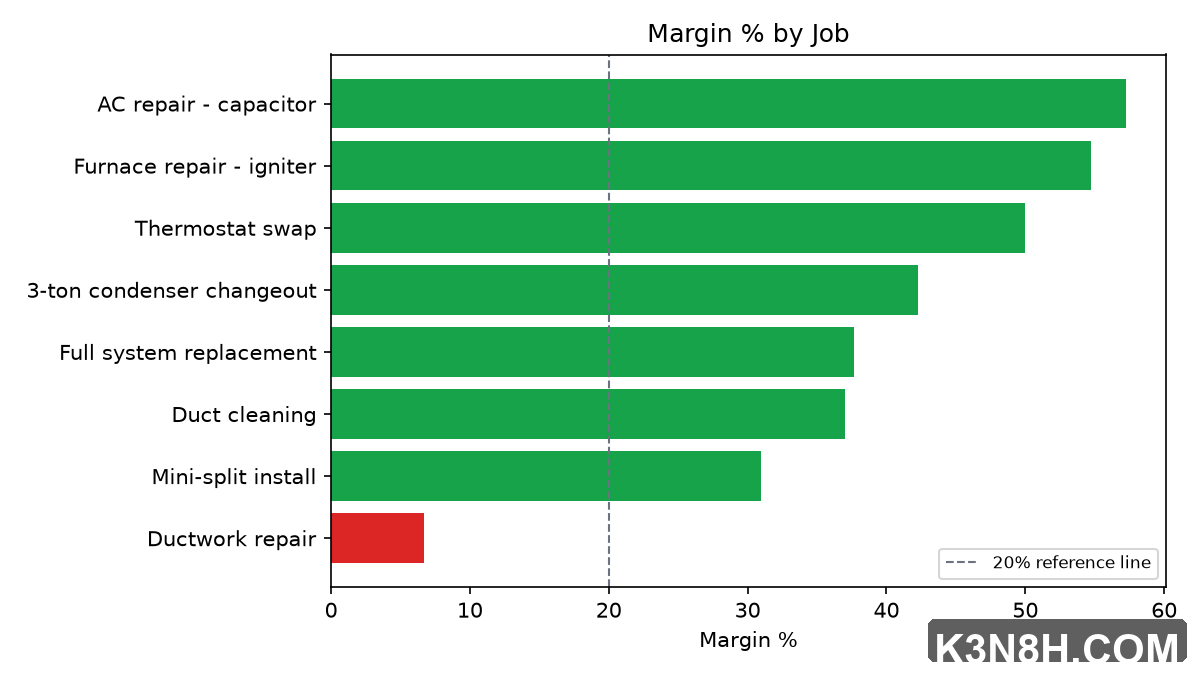
Job Cost Insights
Feed it a job-cost CSV, get a margin chart and a plain-English write-up.